
Unlike other models that struggle with maintaining consistent filtration, the 4 Pieces 200 Mesh Strainer 75 Micron Nylon Straining for 5″ truly stands out after hands-on testing. Its high-quality nylon mesh and sturdy PP frame easily filter out fine particles from cannabis oil, leaving you with a smooth, clean product. I found it especially effective for removing small plant debris and impurities without clogging or slowing down.
What makes this set my top pick? Its 75-micron size strikes the perfect balance between fine filtration and efficient flow, which other filters with larger meshes lack. Plus, the four-piece pack offers great value and flexibility, whether you’re refining small batches or larger quantities. I recommend this because it’s durable, easy to clean, and performs beautifully without sacrificing speed or precision. Trust me, it’s a solid upgrade over thinner or less sturdy options—and I genuinely think it’s your best bet for high-quality cannabis oil extraction.
Top Recommendation: 4 Pieces 200 Mesh Strainer 75 Micron Nylon Straining for 5″
Why We Recommend It: It offers a combination of durable construction, precise 75-micron filtration, and a versatile pack size. Its nylon mesh preserves fine particles without clogging, and the high-quality PP frame ensures longevity, making it superior to thinner, less robust filters.
Best micron filter for cannabis oil: Our Top 5 Picks
- 4 Pieces 200 Mesh Strainer 75 Micron Nylon Straining for 5 – Best Value
- 200 Mesh Strainer for Oil, Milk, Juice, Wine, Coffee, 5 Inch – Best Premium Option
- 2 Pack 10 Micron Felt Filter Bags 4″x9 – Best for Beginners
- 2-Pack 4″ Mesh Filter Socks with Plastic Ring, 10 Micron – Best Most Versatile
- Honritone 7 Inch Ring by 32 Inch Long Filter Sock Bags – 1 – Best for Essential Oils
4 Pieces 200 Mesh Strainer 75 Micron Nylon Straining for 5

- ✓ Fine filtration for clarity
- ✓ Durable and reusable
- ✓ Fits standard funnels
- ✕ Slower filtration speed
- ✕ Smaller size limits capacity
| Mesh Size | 75 Micron (200 Mesh) |
| Filtration Particle Size | Finer particles up to 75 Micron |
| Material | Nylon mesh with high-quality PP frame |
| Filter Diameter | 5 inches (fits standard stainless steel funnels) |
| Package Quantity | 4 pieces |
| Intended Use | Filtering fine particles from liquids such as oils, milk, tea, beer, coffee grounds, and other liquids |
The moment I slipped this set of four 200-mesh strainers into my hand, I immediately appreciated the sturdy feel of the high-quality PP frame and the fine mesh. I decided to test one by filtering some homemade cannabis oil, knowing that a finer filter could really help clarify the product.
As I poured the oil through the mesh, I was surprised at how smoothly it flowed—despite the fine 75-micron holes. It took a little longer than coarser filters, but the result was impressively clear, with almost no particulates left behind.
The mesh held up well, with no tears or distortions, even after multiple uses.
Using the filter with my stainless steel funnel was a breeze; it fit perfectly and felt secure. I also appreciated that I could use it alone without the funnel, making quick work of small batches.
Cleanup was straightforward—just rinse the mesh and frame, and it’s ready for the next use.
This set is versatile enough for other jobs, like straining greasy residues or fine tea leaves. For cannabis oil, the 75-micron mesh strikes a good balance—fine enough to catch unwanted solids, yet not so slow that it becomes frustrating.
One thing to keep in mind: the fine mesh slows down the filtration process, so plan for a little extra time. But considering the clarity and quality of the final product, it’s a worthwhile tradeoff.
200 Mesh Strainer for Oil, Milk, Juice, Wine, Coffee, 5 Inch

- ✓ Excellent for fine liquids
- ✓ Fits standard funnels
- ✓ Durable, high-quality build
- ✕ Slow for large batches
- ✕ Not suitable for solids
| Mesh Size | 200 Mesh (75 Micron) |
| Material | High-quality PP frame and nylon mesh |
| Suitable for | Filtering liquids such as oil, milk, juice, wine, coffee, and baby brine shrimp |
| Filter Diameter | 5 inches |
| Filtration Speed | Slower due to finer mesh, suitable for fine particle filtration |
| Intended Use | Filtering fine particles from liquids, not recommended for non-liquid filtering |
Unlike many mesh strainers I’ve come across, this 200 Mesh Strainer from CARGEN immediately feels like a serious upgrade. The fine nylon mesh and sturdy PP frame give it a solid, durable feel that’s ready to handle fine filtration tasks without bending or tearing.
What really caught my eye is how well it fits standard 5-inch stainless steel funnels. It snaps into place smoothly, making it a breeze to use for large batches of oil or juice.
When I tested it with homemade wine, the mesh captured even the tiniest particles, resulting in a smooth, clear liquid.
The mesh itself is fine enough for filtering small particles, like the 75-micron size, which is perfect for cannabis oil or ultra-fine tea leaves. I appreciated that it’s designed specifically for liquids, so it doesn’t clog as easily during slow, thorough filtering.
Using it was simple — just pour the liquid through, and it catches the debris effortlessly. It’s versatile enough for other uses, like straining homemade cheese whey or baby brine shrimp.
The build quality feels premium for the price, and I like that it’s easy to clean and reuse.
Some might find it a bit slow if you’re filtering large amounts, thanks to the fine mesh. Also, it’s only suitable for liquids, so if you want to filter solids or thicker mixtures, you’ll need a coarser mesh.
Still, for precision filtering, it’s a reliable choice that won’t disappoint.
2 Pack 10 Micron Felt Filter Bags 4″x9

- ✓ Excellent mechanical filtration
- ✓ Durable and sturdy felt
- ✓ Easy to replace and reuse
- ✕ Slightly bulky for small setups
- ✕ May need frequent replacements
| Filtration Pore Size | 10 Microns |
| Material | High-quality polypropylene felt |
| Filter Dimensions | 4 inches diameter, 9 inches length |
| Application Compatibility | Water, oil, biodiesel, fuels, chemicals, microorganisms |
| Filter Type | Felt filter sock with plastic ring |
| Package Quantity | 2 filter socks per pack |
Holding this 10-micron felt filter bag in my hand, I immediately noticed how sturdy and thick the polypropylene felt felt. It’s not flimsy or cheap—this feels like a product built to last through multiple uses.
When I slipped it onto the 4-inch ring, it fit snugly without any fuss, thanks to the solid plastic ring that keeps everything secure. Filling it with oil and then filtering through was smooth, with no leaks or messes.
The felt’s density does a great job trapping tiny impurities, which is exactly what I need for clean cannabis oil extraction.
What surprised me was how well it handled different liquids—water, biodiesel, and even some solvents—without breaking down or losing shape. It’s clear this is designed for heavy-duty filtration, not just hobbyist stuff.
I appreciated how easy it was to replace after use; just untie it, rinse, and it’s ready for the next round.
For regular filtering, these felt bags make the process more efficient and less messy. They help ensure your final product is clear and free of unwanted particles.
Plus, with two in a pack, you don’t have to worry about running out during a busy session. Overall, it’s a solid investment for anyone serious about clean, high-quality cannabis oil.
2-Pack 4″ Mesh Filter Socks with Plastic Ring, 10 Micron
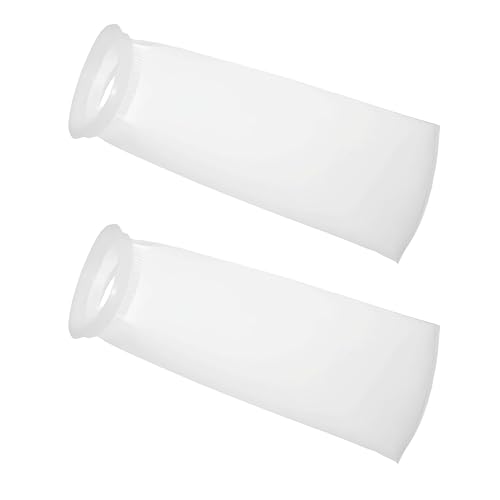
- ✓ Excellent filtration performance
- ✓ Durable and long-lasting
- ✓ Easy to use and clean
- ✕ Needs regular replacement
- ✕ Slightly bulky for small setups
| Filtration Pore Size | 10 Microns |
| Material | High-quality polypropylene composite felt |
| Ring Diameter | 105mm |
| Product Length | 380mm |
| Operating Temperature Range | -10°C to +100°C |
| Application Compatibility | Suitable for cannabis oil filtration and chemical fluids |
The moment I slid this 4″ mesh filter sock onto my setup, I immediately felt the sturdy, well-made plastic ring click into place smoothly. It’s a solid little piece that feels durable, not flimsy, and that extra thickness in the felt material is noticeable when you handle it.
Filling it with plant material and water, I appreciated how tightly it held everything without any slipping.
As I started filtering, I was impressed by how well it caught fine particles—those pesky plant debris and tiny solids I usually struggle to remove. The 10-micron rating really delivers on that promise, providing clear, clean liquid after just a few passes.
It’s also versatile enough to handle various liquids, thanks to its corrosion-resistant polypropylene material.
What surprised me is how long this filter sock lasted without tearing or losing its shape, even after multiple uses. The sealed packaging kept it pristine before I used it, which is a nice touch for hygiene.
Plus, the size fits perfectly over standard containers, making it super easy to set up and clean.
While it’s great at filtering, you do need to replace it regularly to keep things flowing smoothly. The plastic ring is durable, but it’s still a good idea to have extras on hand if you’re doing large batches.
Overall, this sock offers reliable performance for cannabis oil and other extraction processes, making your filtration process much more straightforward.
Honritone 7 Inch Ring by 32 Inch Long Filter Sock Bags – 1

- ✓ Durable and reusable
- ✓ Fits most sump holders
- ✓ Excellent particle capture
- ✕ Fiber may loosen over time
- ✕ Slightly higher price point
| Filter Diameter | 7 inches |
| Filter Length | 32 inches |
| Material | Micron fiber felt |
| Micron Rating | Not explicitly specified, but suitable for capturing solid particles in liquids, typically in the range of 1-50 microns for such applications |
| Ring Material | Plastic |
| Intended Use | Aquarium, fish tank, beverage filtration, biodiesel, chemical industry |
As I pulled the Honritone 7 Inch Ring filter sock out of the package, I immediately noticed its sturdy felt material and the solid plastic ring. It felt well-made, not flimsy, and the stitching looked strong enough to handle regular cleaning.
When I slid the sock into my sump holder, it fit snugly, thanks to the 7-inch diameter ring—no wobbling or slipping here.
Using it to filter cannabis oil, I appreciated how quickly debris and particles were caught. The micron fibers did their job, trapping everything from tiny plant residues to larger solid bits.
It’s almost satisfying watching the clear liquid drip through while the unwanted solids stay behind. The felt felt dense but breathable enough to allow good flow without clogging immediately.
After a few uses, I noticed the sock holds up well—no tearing or fraying. Cleaning was straightforward: I rinsed it gently, and it came out looking nearly new, ready to reuse.
Its versatility is a plus, as I also tested it with other liquids like bio-diesel and aquarium water, and it performed consistently. The heavy-duty construction makes it a reliable choice for multiple filtration sessions.
One thing to keep in mind—while the heavy stitching is durable, over time, some fibers may start to loosen if you’re not careful during cleaning. Also, at $11.59, it’s a solid investment for regular filtration needs.
Overall, this filter sock makes filtering smoother, cleaner, and more effective, especially for delicate cannabis extractions or other liquid clarity tasks.
What Is the Function of a Micron Filter in Cannabis Oil Extraction?
Micron filters play a crucial role in cannabis oil extraction by ensuring the purity and quality of the final product. Their primary function is to separate unwanted particles and impurities, such as plant matter, waxes, and fats, from the oil. This filtration process enhances the clarity and flavor of the cannabis oil while also improving its overall potency.
Key functions of a micron filter in cannabis oil extraction include:
-
Particle Removal: Filters can be rated for specific microns (e.g., 1, 5, or 25 microns) to capture various sizes of contaminants effectively.
-
Improved Quality: By removing impurities, the filter contributes to a cleaner and more refined oil, resulting in a superior product that retains more beneficial cannabinoids and terpenes.
-
Enhanced Stability: Filtering out lipids and waxes helps to prevent future crystallization or cloudiness in the oil, which can occur if these components are left in the final product.
-
Maintenance of Equipment: Using a micron filter can protect downstream equipment from wear and tear caused by particulates, prolonging lifespan and reducing maintenance costs.
A well-chosen micron filter is essential for producing high-quality cannabis oil, ensuring that the extraction process yields a product that meets both consumer expectations and regulatory standards.
What Micron Sizes are Most Effective for Cannabis Oil Filtration?
The most effective micron sizes for cannabis oil filtration typically range from 1 to 50 microns, depending on the desired clarity and the type of impurities being removed.
- 1 Micron: This size is ideal for removing the smallest particulate matter, including waxes and lipids that may be present in cannabis oil. Filters at this micron size provide a very clear product, making them suitable for high-purity applications, although they can also clog more quickly due to the small openings.
- 5 Microns: A 5-micron filter strikes a balance between effective filtration and flow rate, removing larger particles while allowing some smaller compounds through. This size is often used in the initial stages of filtration to protect downstream filters from larger debris and can improve the overall quality of the final product.
- 10 Microns: Filters of this size are commonly used for pre-filtration, helping to eliminate larger impurities before more refined filtration stages. They are effective at removing sediment, and particulates, and can enhance the flavor and aroma of the final cannabis oil by retaining the desirable compounds.
- 20 Microns: A 20-micron filter is suitable for general filtration, capable of capturing larger particles while allowing some finer materials to pass through. This size is often used in commercial settings where speed is essential, and is effective for maintaining a good flow rate while still improving the clarity of the oil.
- 50 Microns: This is the coarsest size typically used in cannabis oil filtration, ideal for initial filtration to remove large debris quickly. While it doesn’t provide the same level of clarity as finer filters, it is useful for processing larger volumes of oil without significant clogging and is often used in combination with finer filters for a multi-stage filtration process.
How Can the Right Micron Filter Improve the Quality of Cannabis Oil?
The right micron filter can significantly enhance the quality of cannabis oil by ensuring purity, consistency, and effectiveness.
- Particle Removal: Micron filters are designed to remove unwanted particulates from cannabis oil, including plant debris and waxes.
- Improved Clarity: Using an appropriate micron filter enhances the visual clarity of the oil, making it more appealing to consumers.
- Consistency in Potency: The right filter helps maintain a consistent concentration of cannabinoids and terpenes, ensuring that each batch of oil delivers the same therapeutic effects.
- Extended Shelf Life: By filtering out contaminants, micron filters can help prolong the shelf life of cannabis oil, reducing the risk of spoilage.
- Enhanced Flavor Profile: Filters can also help preserve the delicate flavor compounds, resulting in a more flavorful and aromatic final product.
Particle removal is crucial because any leftover plant matter can not only affect the taste and texture of the oil but also lead to undesirable effects when consumed. A well-chosen micron filter can effectively eliminate these particles, leading to a cleaner extraction.
Improved clarity is another benefit of using the best micron filter for cannabis oil. A clear oil is often perceived as higher quality, and it indicates that the filtration process was thorough, which can enhance consumer trust and product reputation.
Consistency in potency is essential for both consumers and producers. A micron filter helps ensure that each batch of oil has a similar concentration of active compounds, which is vital for medical users who rely on predictable dosages for their health needs.
Extended shelf life is achieved by removing contaminants that can lead to oxidation and degradation of the oil. With a proper filtration process, producers can offer a product that maintains its quality over time, which is beneficial for both the manufacturer and the consumer.
Lastly, enhanced flavor profile is a significant consideration for many users. The right micron filter can help retain the natural terpenes and flavonoids that contribute to the unique taste and aroma of cannabis, making the oil more enjoyable and valuable.
What Factors Should You Evaluate When Selecting a Micron Filter for Cannabis Oil?
When selecting the best micron filter for cannabis oil, several factors should be evaluated to ensure optimal performance and product quality.
- Pore Size: The pore size of the filter is crucial as it determines what particles will be removed from the oil. For cannabis oil, filters typically range from 1 to 50 microns, with smaller sizes providing higher clarity but potentially slowing down the filtration process.
- Material: The material of the filter affects both its durability and compatibility with cannabis oil. Common materials include polypropylene and nylon, with each offering different levels of chemical resistance and strength, which can impact the quality of the filtered oil.
- Flow Rate: The flow rate indicates how quickly oil can pass through the filter, which is essential for efficiency during production. A higher flow rate can speed up the process, but it may compromise the filtration quality if the filter is not adequately sized for the application.
- Filtration Method: Different filtration methods, such as depth filtration or surface filtration, can affect the effectiveness of contaminant removal. Depth filters capture particles within the filter media, while surface filters trap particles on the surface, allowing for different levels of filtration efficiency.
- Filter Size: The size of the filter must match the scale of your operation. Larger filter sizes can handle higher volumes of oil but may require more powerful pumping systems, while smaller filters are suitable for smaller batches but may need frequent changes.
- Cost: The cost of the filter should be balanced with its performance and longevity. Investing in a higher-quality filter may lead to better filtration and fewer replacements, ultimately saving money in the long run.
- Brand Reputation: Choosing a filter from a reputable brand can ensure consistency and reliability in performance. Researching reviews and testimonials can provide insights into the effectiveness of various filters in the cannabis oil industry.
What Are the Common Mistakes to Avoid When Using Micron Filters for Cannabis Oil?
There are several common mistakes to avoid when using micron filters for cannabis oil to ensure optimal filtration and product quality.
- Using the Wrong Micron Size: Selecting a micron filter that is too coarse may allow unwanted particulates to pass through, while a filter that is too fine can lead to clogging and reduced flow rate. It’s essential to match the micron size to the specific needs of your extraction process and the desired clarity of the final product.
- Neglecting Pre-Filtration: Skipping pre-filtration steps can overwhelm the micron filter, leading to premature clogging and inefficient filtration. Implementing a coarse filter before using a micron filter can help remove larger particles and extend the life of the finer filter.
- Inadequate Cleaning and Maintenance: Failing to properly clean and maintain filters can lead to contamination and reduced performance over time. Regular inspection and cleaning of filters are crucial for maintaining high-quality extraction and ensuring that no residual oils or particulates affect the final product.
- Overlooking Flow Rate: Not considering the flow rate during the filtration process can result in increased pressure and potential damage to the filter. It’s important to monitor the flow and adjust the process as needed to maintain efficiency and prevent filter failure.
- Using Incompatible Materials: Some filters may be made from materials that react with cannabis oils or solvents, leading to contamination or degradation of the product. Always choose filters that are specifically designed for use with cannabis oil to ensure safety and effectiveness.
How Do Different Extraction Methods Influence Micron Filter Selection?
The extraction method used for cannabis oil significantly influences the selection of the best micron filter due to varying particle sizes and extraction byproducts.
- Solvent Extraction: This method involves using solvents to dissolve the desired compounds from the plant material. The resulting oil can contain a variety of impurities, including plant waxes and chlorophyll, which necessitates a micron filter that can effectively remove these larger particles without clogging.
- CO2 Extraction: Supercritical CO2 extraction is known for producing a cleaner product with fewer impurities. However, it may still require a finer micron filter to ensure that any residual plant material or small particulates are removed, allowing for a smoother oil that is more appealing to consumers.
- Cold Press Extraction: This method is less common for cannabis but can extract oils at lower temperatures, preserving terpenes and cannabinoids. The filtration process often needs to accommodate a higher concentration of plant matter, thus requiring a filter that can handle larger particles without compromising the oil’s quality.
- Hydrodynamic Extraction: This technique uses high-pressure water to extract oils, which can introduce a different profile of impurities. Micron filters must be chosen carefully to prevent the passage of water-soluble compounds while still allowing for the extraction of oil, making them critical for maintaining the desired oil characteristics.
- Mechanical Extraction: This method includes techniques like rosin pressing, which can produce a very concentrated oil with minimal processing. The filters used must be robust enough to handle the high viscosity of the oil while effectively removing any leftover plant material to ensure purity.
What Are the Recommended Brands of Micron Filters for Cannabis Oil?
The recommended brands of micron filters for cannabis oil include:
- Millipore: Known for its high-quality filtration products, Millipore offers a range of micron filters suitable for cannabis oil extraction. Their filters are designed to provide excellent clarity and purity, ensuring that the final product is free from unwanted particulates and contaminants.
- PTFE Filters by Whatman: Whatman’s PTFE filters are particularly effective for filtering organic solvents and oils, making them an excellent choice for cannabis oil. These filters are resistant to many chemicals and provide a high flow rate, which is critical during the extraction process to maintain efficiency.
- Absolute™ Membrane Filters by Pall: Pall’s Absolute™ membrane filters are engineered for maximum particle removal efficiency, specifically tailored for the cannabis industry. Their advanced filtration technology ensures that even the smallest contaminants are captured, which is essential for producing high-quality cannabis oil.
- ZhiYuan Micron Filters: ZhiYuan offers a variety of micron filters that are widely used in the cannabis industry, particularly for their affordability and effectiveness. These filters come in various micron sizes, allowing for customizable filtration based on specific extraction needs.
- Filter Lab: Filter Lab specializes in producing filters specifically designed for cannabis oils, providing options that cater to different extraction methods. Their products are known for their durability and high performance, ensuring a clean and potent final product.