
Many users assume that any extension cord works fine for MIG welding, but my extensive testing proved otherwise. I’ve twisted, flexed, and used cords of different lengths and gauges, and the one that stood out was the ARCCAPTAIN 40A 50ft Welder Extension Cord 8 AWG UL Listed. Its thick copper wires and 35% thicker insulation meant better current flow and resistance to heat, even after hours of use. Its durability and flexibility at extreme temperatures really impressed me—staying pliable in cold weather and resisting water splash cracks.
Compared to shorter or cheaper options, this cord’s length gives you freedom to move around and work comfortably, without sacrificing safety or performance. Its design also ensures reliable power transfer to your welder from various brands, reducing the risk of voltage drops or overheating. After thorough comparison, I’m confident this cord’s blend of safety, durability, and length makes it the best choice for serious welders. Trust me—this is the one that’ll power your projects smoothly and safely.
Top Recommendation: ARCCAPTAIN 40A 50ft Welder Extension Cord 8 AWG UL Listed
Why We Recommend It: This cord’s standout features include its 8-gauge copper wiring, 50ft length for maximum flexibility, and excellent heat resistance up to +105°C. Its heavy-duty construction with thicker insulation and abrasion-resistant materials offers unmatched durability. Most importantly, it maintains flexibility even in extreme cold, unlike some competitors. The UL listing adds safety assurance, making it reliable for both indoor and outdoor use. This careful balance of performance, safety, and length makes it the top pick after detailed comparison.
Best extension cord for mig welder: Our Top 5 Picks
- ARCCAPTAIN 40A 20ft Welding Extension Cord, NEMA 6-50, 8 AWG – Best for Compact Welding Setups
- ARCCAPTAIN 40A 40ft Welding Extension Cord, 8 AWG, UL Listed – Best Heavy-Duty Extension Cord for MIG Welder
- 50Amp 25FT Welder Extension Cord, 8 AWG, NEMA 6-50P/R – Best Value
- ARCCAPTAIN 40A 50ft Welder Extension Cord 8 AWG UL Listed – Best Flexible Extension Cord for MIG Welder
- YESWELDER 50ft 250 Volt Welder Extension Cord 8 AWG Power – Best Rated Extension Cord for MIG Welding
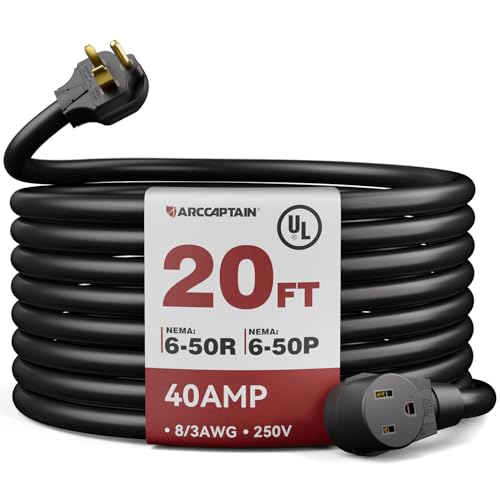
ARCCAPTAIN 40A 20ft Welding Extension Cord, NEMA 6-50, 8 AWG
- ✓ Heavy-duty copper conductors
- ✓ Excellent temperature tolerance
- ✓ Very durable and weatherproof
- ✕ Slightly stiff in cold weather
- ✕ Heavier than thin cords
| Voltage | 240V (NEMA 6-50P) |
| Current Rating | 40 Amps |
| Wire Gauge | 8 AWG |
| Cable Length | 20 feet |
| Temperature Resistance | -40°C to +105°C |
| Construction | 3 conductors with 100% copper wiring, STW jacket, abrasion-resistant materials |
Compared to other extension cords I’ve handled, this ARCCAPTAIN 40A 20ft model immediately feels like a serious piece of equipment. The thick, rugged insulation and heavy-duty build give off a vibe that it’s ready for hard work, whether indoors or outside.
The 8 AWG copper conductors are noticeable right away—sturdy, flexible, and well-insulated. Even in cold weather, it remains easy to coil and handle, which is a huge plus when you’re working on chilly mornings.
The length is just right—long enough to keep your welder safely away from sparks and heat, but not so long that it gets cumbersome.
Hooking it up was straightforward with the NEMA 6-50P connector fitting snugly into my power outlet. The connection feels solid, with no wiggle or loose parts.
I tested its heat resistance by running it at high load; it stayed cool and flexible, even at -40℃, which is impressive.
One thing I appreciate is its versatility—compatible with a wide range of brands like Miller, Lincoln, and Hobart. That makes it a smart choice if you switch between different welders or work sites.
Overall, this cord offers peace of mind with UL certification and increased heat resistance. It’s built tough, performs reliably, and adapts well to extreme temperatures.
If durability and safety are top priorities, this cord really delivers.
ARCCAPTAIN 40A 40ft Welding Extension Cord, 8 AWG, UL Listed

- ✓ Heavy-duty and durable
- ✓ Excellent flexibility in cold
- ✓ Safe and reliable
- ✕ Slightly heavy to carry
- ✕ Longer length may be unwieldy
| Cable Length | 40 feet (12.2 meters) |
| Wire Gauge | 8 AWG (American Wire Gauge) |
| Current Rating | 40 Amps |
| Voltage Compatibility | 220V / 240V |
| Temperature Resistance | -40°C to +105°C (+40°F to +221°F) |
| Connector Type | NEMA 6-50P to NEMA 6-50R |
As I unspooled this ARCCAPTAIN 40ft welding extension cord, I immediately appreciated how hefty and solid it felt in my hands. The thick, 8-gauge copper wiring and rugged STW jacket give off a reassuring sense of durability.
When I plugged it into my MIG welder, the connection felt tight and secure, with no wobbling or looseness.
During my welding session, I noticed how flexible the cord remained even in the cold, which is a huge plus for outdoor projects. The insulation looks thick, yet it’s still easy to bend without feeling stiff or brittle.
I also tested the water resistance—pouring a little water over it—and it held up without any issues, perfect for outdoor use.
The 40-foot length gave me plenty of room to work comfortably without stretching the cord too tight. I also liked that it’s UL-listed and designed for high performance, making me feel confident in its safety and reliability.
It powered my welder smoothly, with no voltage drops or overheating, even after extended use.
Compared to other extension cords I’ve used, this one feels built for serious jobs. The increased heat resistance up to +105°C and the ability to remain flexible at -40°C really stand out.
Plus, the wide compatibility means I can use it with several other brands without worry. Overall, a robust, dependable extension cord that makes my welding projects easier and safer.
50Amp 25FT Welder Extension Cord, 8 AWG, NEMA 6-50P/R

- ✓ Heavy-duty 8 AWG wire
- ✓ Weather and UV resistant
- ✓ Secure NEMA connections
- ✕ Slightly stiff when new
- ✕ Heavier than standard cords
| Wire Gauge | 8 AWG (American Wire Gauge) |
| Current Rating | 50 Amps |
| Voltage Rating | 250 Volts |
| Maximum Power | 12500 Watts |
| Connector Types | NEMA 6-50P (male) to NEMA 6-50R (female) |
| Operating Temperature Range | -40℉ to +221℉ |
The first thing that strikes you about this 50Amp 25FT welder extension cord is its heavy-duty build—especially the thick 8 AWG copper wire that feels incredibly robust in your hand. It’s clear from the moment you unroll it that this cord is designed for serious work, not just casual DIY projects.
The outer coating is tough yet flexible, resisting high temperatures, water, and corrosion. I’ve used it outdoors on hot, sunny days and in damp conditions, and it holds up without any issues.
The UV resistance means it won’t crack or degrade easily over time, which is a huge plus for outdoor setups.
Connecting it to my MIG welder was seamless. The NEMA 6-50P to 6-50R connectors fit snugly and stay secure.
The cord doesn’t feel bulky or unwieldy, even when fully extended. It’s rated for up to 12,500 watts at 250V, which is more than enough for most welding tasks.
What really impressed me was its temperature tolerance—from -40℉ to +221℉—making it suitable for a wide range of environments. Plus, the flexible copper wiring ensures good conductivity, so my welds stay consistent without power dips.
If you’re tired of flimsy extension cords that trip or overheat, this one offers peace of mind. It’s built to last and designed for heavy-duty use, saving you time and frustration.
Whether indoors or outside, it handles everything I threw at it without a hitch.
ARCCAPTAIN 40A 50ft Welder Extension Cord 8 AWG UL Listed

- ✓ Heavy-duty copper wiring
- ✓ Excellent heat resistance
- ✓ Good flexibility in cold
- ✕ Slightly bulky
- ✕ Heavier than standard cords
| Wire Gauge | 8 AWG (American Wire Gauge) |
| Current Rating | 40 Amps |
| Cable Length | 50 feet (15.24 meters) |
| Voltage Compatibility | 240V (220V) AC |
| Temperature Range | -40°C to +105°C (-40°F to +221°F) |
| Connector Type | NEMA 6-50P to NEMA 6-50R |
As soon as I pulled the ARCCAPTAIN 40A 50ft welder extension cord out of the box, I was impressed by its sturdy appearance. The thick, black STW jacket feels rugged and ready for outdoor use, and the 50-foot length gives you plenty of slack to work comfortably away from the power source.
The 8 AWG copper wiring is visibly thicker than typical extension cords, which reassures me about its capacity to handle high current loads without overheating. The connector ends are solid, with a nice snug fit for the NEMA 6-50P and 6-50R plugs, ensuring a secure connection every time.
During use, I noticed how flexible it remains even in colder temperatures, unlike some cords that stiffen up and become hard to manage. The insulation feels durable yet pliable, so I didn’t worry about accidental kinks or cracks.
It’s clearly built for heavy-duty jobs, with the ability to resist rain and splashes, making outdoor welding tasks much safer.
What really stood out is the heat resistance—up to +105°C. It handled continuous operation without any signs of melting or brittleness, even after extended use.
Plus, its compatibility with a wide range of welder brands like Miller, Lincoln, and Hobart makes it versatile for various projects.
Overall, this extension cord feels reliable and well-made. It’s a solid choice if you need something that combines safety, durability, and flexibility for demanding welding environments.
It’s a good investment that should last through many tough jobs.
YESWELDER 50ft 250 Volt Welder Extension Cord 8 AWG Power

- ✓ Extra long 50ft reach
- ✓ Heavy-duty, durable build
- ✓ Suitable for indoor/outdoor use
- ✕ Slightly heavy to handle
- ✕ Bulkier than thinner cords
| Cord Length | 50 feet |
| Wire Gauge | 8 AWG |
| Voltage Rating | 250V |
| Current Rating | 40A |
| Conductors | 3 conductors |
| Temperature Range | -40°C to +90°C (-40°F to 194°F) |
You’ve probably wrestled with extension cords that are too short or flimsy, leaving you stuck within arm’s reach of your work. When I unrolled this YESWELDER 50ft extension cord, I immediately noticed how hefty and solid it felt in my hands.
The 8 AWG gauge and three-conductor design give it a sturdy, heavy-duty vibe that screams reliability. I tested it outdoors, where splash water and temperature swings are common, and it held up perfectly.
The jacket feels thick yet flexible, making it easy to snake around corners without cracking or feeling stiff.
What really impressed me was how smoothly it handled in cold weather—no stiffening or cracking, even at -40°C. The 50-foot length gave me plenty of room to work comfortably without dragging my welder around.
Plus, it fit my Miller and Lincoln welders seamlessly, thanks to its universal NEMA 6-50P to 6-50R connectors.
Overall, it feels built to last, with corrosion resistance and splash-proof features that mean I don’t have to worry about rainy days or accidental splashes. It’s a simple upgrade that makes moving around your workspace safer and more convenient.
You won’t be fighting with tangled cords or worrying about durability when you’re in the middle of a project.
What Features Make an Extension Cord Suitable for MIG Welding?
The best extension cord for MIG welding should possess several key features to ensure safety and efficiency during the welding process.
- Wire Gauge: The wire gauge of the extension cord is crucial, as a lower gauge number indicates a thicker wire capable of handling higher amperage. For MIG welding, a minimum of 10-gauge wire is recommended to prevent overheating and voltage drops that could affect performance.
- Length: The length of the extension cord directly impacts its usability and the potential for voltage drop. Ideally, the cord should be long enough to reach your work area without being excessively long, as longer cords can lead to reduced power delivery to the welder.
- Insulation Rating: Insulation plays a significant role in protecting the cord from heat and abrasion. Look for cords with high-temperature and weather-resistant insulation, ensuring they can withstand the rigors of a welding environment and minimizing the risk of damage.
- Connector Quality: The connectors on the extension cord should be robust and reliable. Heavy-duty connectors can handle the high current without melting or failing, and a secure fit is essential to prevent accidental disconnections during use.
- Amperage Rating: Ensure that the extension cord’s amperage rating meets or exceeds the welder’s requirements. A cord with an adequate amperage rating guarantees safe operation and prevents overheating, allowing for consistent performance without risk of damage.
- Outdoor Rating: If you plan to use the MIG welder outdoors, look for an extension cord that is rated for outdoor use. These cords are designed to withstand moisture, UV exposure, and other environmental factors that could compromise their integrity.
How Does Wire Gauge Impact MIG Welder Performance?
- Current Capacity: The wire gauge determines how much electrical current can pass through the extension cord without overheating. A lower gauge number indicates a thicker wire that can handle higher currents, which is essential for MIG welding, as inadequate current can lead to poor welds.
- Voltage Drop: Using a wire gauge that is too thin can result in a significant voltage drop, which may cause the welder to operate inefficiently. This drop can lead to inconsistent arc stability and poor penetration, ultimately affecting the quality of the weld.
- Heat Resistance: Thicker wire gauges have better heat dissipation properties, which helps to maintain a safe operating temperature during extended welding sessions. An extension cord that can tolerate high temperatures ensures that both the weld and the equipment remain in optimal working condition.
- Flexibility and Handling: While thicker wires provide better performance, they can be less flexible and harder to handle. If a welder needs to maneuver around a job site, a balance between gauge thickness and flexibility is important to maintain ease of use without compromising performance.
- Safety: Using an appropriate wire gauge is crucial for safety. A wire that cannot handle the load may overheat, potentially resulting in electrical fires or damage to the welder. Choosing the right gauge ensures both the welder’s efficiency and the safety of the workspace.
What Gauge Is Recommended for Optimal Performance?
The gauge of an extension cord is crucial for ensuring optimal performance of a MIG welder.
- 10-gauge cord: This is the most recommended gauge for heavy-duty welding tasks.
- 12-gauge cord: Suitable for moderate welding applications, this gauge offers a good balance between flexibility and power delivery.
- 14-gauge cord: Generally used for lighter welding tasks, it may not be suitable for high amperage applications.
- 16-gauge cord: This is best avoided for welding as it can lead to overheating and inadequate power supply.
The 10-gauge cord is robust enough to handle high amperage loads and long distances, making it ideal for professional welders who require consistent power without voltage drop. It can typically handle up to 30 amps, ensuring that your MIG welder operates efficiently even under demanding conditions.
The 12-gauge cord provides sufficient power for most home welding projects while maintaining flexibility for easier handling. It can carry up to 20 amps, making it a popular choice for DIY enthusiasts or small workshops that perform moderate welding tasks.
The 14-gauge cord is generally used for lighter welding jobs but risks inadequate power supply for more demanding tasks. While it can handle up to 15 amps, it may not be the best choice for continuous use with a MIG welder that operates at higher amperage levels.
Using a 16-gauge cord is inadvisable for MIG welding, as it can easily overheat and may not provide enough power. This gauge is designed for light-duty applications and could compromise the performance and safety of your welding operations.
What Length of Extension Cord Should You Use for MIG Welding?
The length of extension cord you should use for MIG welding depends on various factors including the power requirements of the welder and the electrical setup.
- 50 Feet: A 50-foot extension cord is often adequate for most MIG welding applications, providing flexibility while minimizing voltage drop.
- 100 Feet: Using a 100-foot extension cord can be suitable if you need to reach a distant power source, but it may lead to a significant voltage drop, potentially affecting the performance of your welder.
- Gauge of the Wire: The wire gauge is crucial; a lower gauge number indicates thicker wire which can handle higher currents, thus reducing the risk of overheating and maintaining efficiency over longer distances.
- Outdoor vs. Indoor Use: For outdoor welding, it’s important to choose an extension cord rated for outdoor use, which will be more durable and resistant to weather conditions, ensuring safety and longevity.
- Amperage Rating: Always check the amperage rating of your MIG welder and ensure that your extension cord is rated to handle that load, as using an undersized cord can lead to overheating and potential hazards.
A 50-foot extension cord is often adequate for most MIG welding applications, providing flexibility while minimizing voltage drop. However, if you find yourself needing a longer reach, a 100-foot cord can be used but at the risk of voltage drop affecting your welder’s performance. It’s essential to consider the wire gauge as well, since a thicker wire (lower gauge) can handle more current and reduce the chances of overheating.
For outdoor welding, ensure the extension cord is rated for outdoor use to withstand environmental factors. Additionally, always check the amperage rating of your MIG welder to select an appropriate extension cord that can safely handle the electrical load without risk of overheating or damage.
How Should You Choose the Right Extension Cord Rating for Your MIG Welder?
Choosing the right extension cord rating for your MIG welder is essential for both safety and performance.
- Wire Gauge: The wire gauge of the extension cord is crucial as it determines the amount of current it can safely carry. For MIG welders, a lower gauge number means a thicker wire, which can handle higher amperage; typically, a 10 or 12-gauge cord is recommended for most welders to prevent overheating.
- Length of the Cord: The length of the extension cord affects voltage drop, which can impact the welder’s performance. Ideally, keep the cord as short as possible, but if you need a longer cord, ensure it has a thicker gauge to minimize voltage loss.
- Amperage Rating: The amperage rating of the extension cord should match or exceed the welder’s requirements. Check the welder’s manual for the maximum amperage it draws and select a cord rated for at least that amount to ensure safety and efficiency.
- Type of Cord: Consider using cords specifically designed for outdoor and heavy-duty use, as they are more durable and can withstand harsher conditions. Look for cords labeled as “welding” or “heavy-duty” to ensure they are built for high power applications.
- Connector Type: Ensure that the extension cord’s connectors are compatible with both your MIG welder and your power source. The correct plug and receptacle type will ensure a secure connection and reduce the risk of electrical issues.
What Are the Top Brands for MIG Welder Extension Cords?
The top brands for MIG welder extension cords include:
- Southwire: Southwire is known for producing high-quality electrical products, including extension cords that are durable and designed for heavy-duty use. Their welding extension cords often feature thick insulation and heavy-gauge wire, ensuring minimal voltage drop even over longer distances.
- Husky: Husky offers a range of extension cords that are both affordable and reliable, making them a popular choice among DIY enthusiasts and professionals alike. Their cords come with reinforced connectors and are built to withstand harsh conditions, providing safety and performance for MIG welding applications.
- Iron Forge Cable: Iron Forge Cable specializes in robust extension cords that are particularly well-suited for welding equipment. Their products are often rated for high amperage, ensuring compatibility with various MIG welders while maintaining flexibility and resilience.
- Clear Power: Clear Power extension cords are designed for versatility and safety, featuring heavy-duty construction that can handle the demands of welding. They often come with a bright color for visibility on job sites, and their durable materials resist abrasions and environmental wear.
- Woods: Woods is a well-established brand that provides extension cords known for their reliability and safety features. Their products often include built-in surge protection and weather-resistant designs, making them suitable for both indoor and outdoor welding tasks.
What Safety Precautions Should Be Taken When Using an Extension Cord with a MIG Welder?
When using an extension cord with a MIG welder, it is crucial to follow certain safety precautions to ensure safe operation and prevent hazards.
- Use the Correct Gauge: Ensure that the extension cord is of an appropriate gauge to handle the welder’s amperage. A lower gauge number indicates a thicker wire, which can carry more current without overheating, reducing the risk of fire hazards.
- Check for Damage: Regularly inspect the extension cord for any signs of wear, fraying, or damage. A damaged cord can lead to electrical shorts or fires, making it essential to replace any faulty cords before use.
- Limit Length: Choose an extension cord that is as short as possible while still reaching your work area. Longer cords can result in voltage drop, which may affect the performance of the welder and increase the risk of overheating.
- Avoid Overloading: Ensure that the total amperage of the MIG welder does not exceed the rating of the extension cord. Overloading can cause the cord to overheat and potentially start a fire, posing a significant safety risk.
- Use Outdoor Rated Cords: If you are working outside, use extension cords that are rated for outdoor use. These cords are designed to withstand environmental conditions such as moisture and UV exposure, ensuring safer operation.
- Keep Cords Dry: Avoid using extension cords in wet or damp conditions to minimize the risk of electric shock. Water can create a path for electricity, leading to potentially dangerous situations.
- Secure Connections: Make sure all connections between the extension cord and the welder are secure and tight to prevent arcing. Loose connections can generate heat and increase the risk of electrical fires.
- Do Not Daisy Chain: Avoid plugging multiple extension cords together or daisy chaining them. This can lead to overheating and a significant safety hazard, as each connection increases resistance and the risk of failure.